
Trogir, Blue Lagoon, Rogač and Nečujam private boat tour
Trogir, Blue Lagoon, Rogač and Nečujam Private Boat Tour from Split
A UNESCO-listed old town, the turquoise lagoon at Krknjaši and two bays on the north coast of Šolta — four stops in a full day, on a boat that belongs only to your group.
Four stops is the point. Most full-day routes from Split fit in five or six, which leaves an hour here and forty minutes there. This one gives you a morning in Trogir, a long swim in the lagoon and a whole afternoon on Šolta without hurrying anyone back on board.
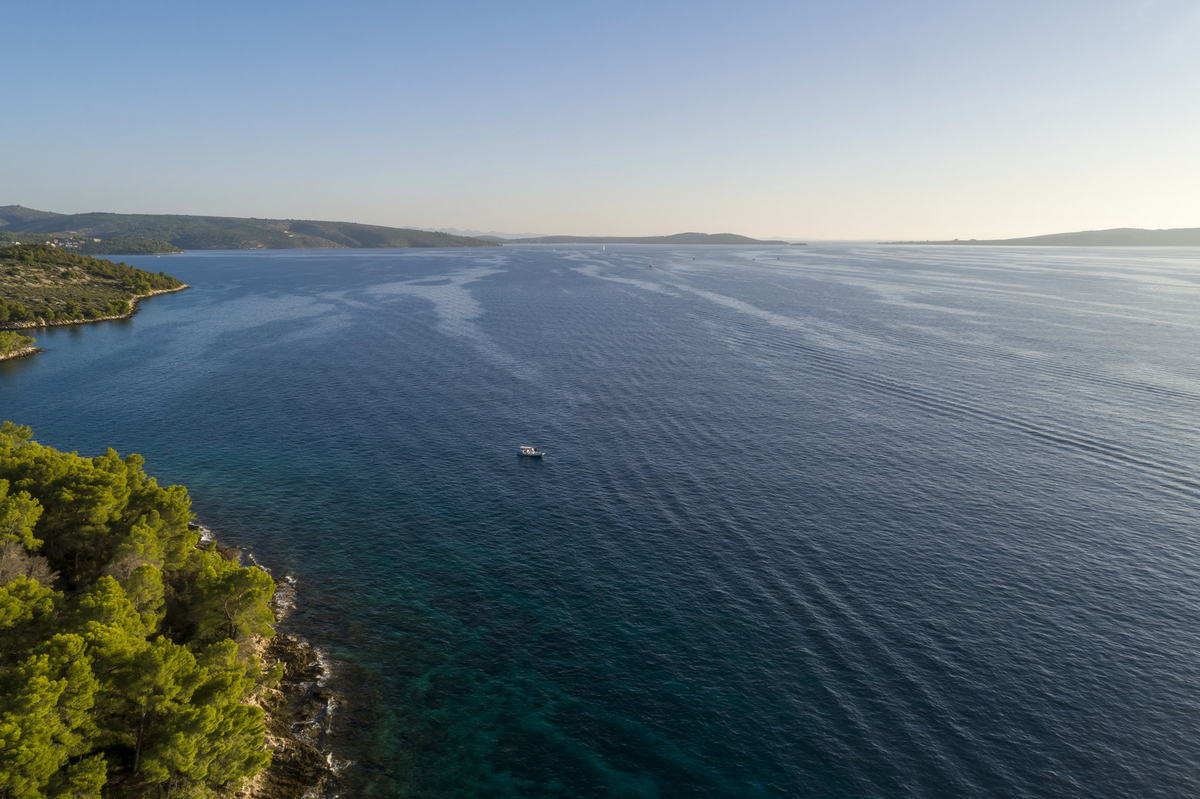
It is also the cheapest full day on our list and one of the two most sheltered. The route stays inside the Trogir and Split channels, so there is no open-sea crossing at any point.
Which Blue Lagoon is this, and where are Rogač and Nečujam?
Two of the three names on this tour are not on most maps of Croatia, and the third is used for two different places. Worth clearing up before you book.
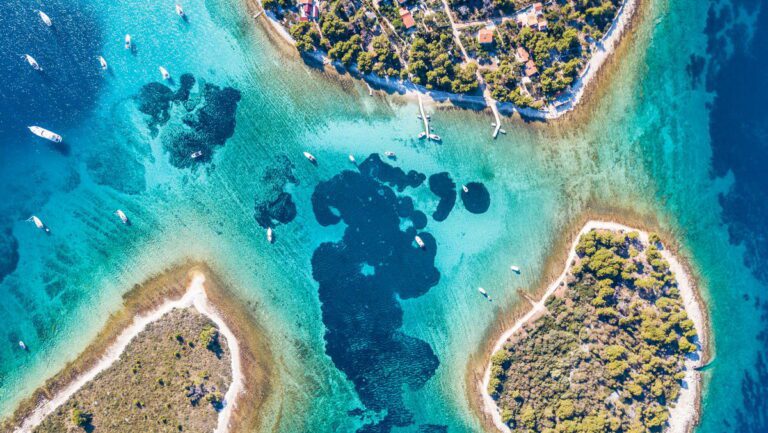
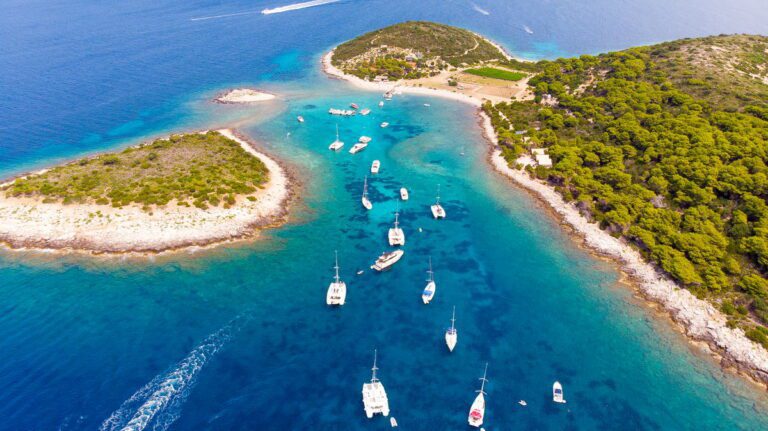
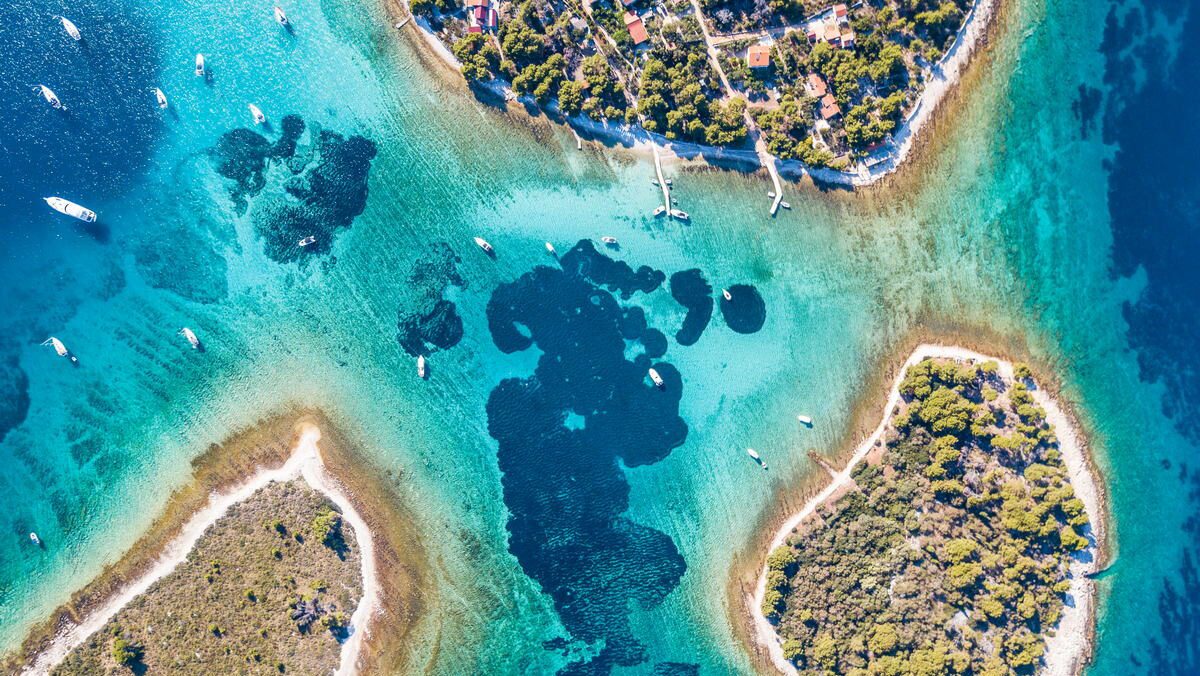
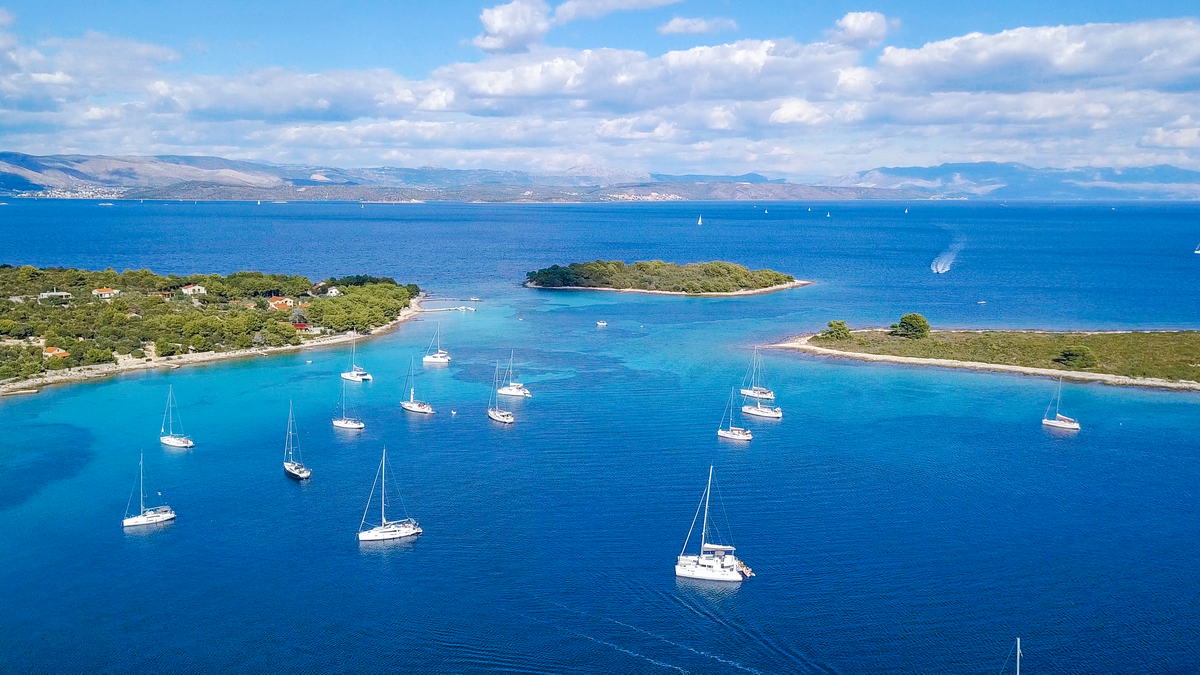
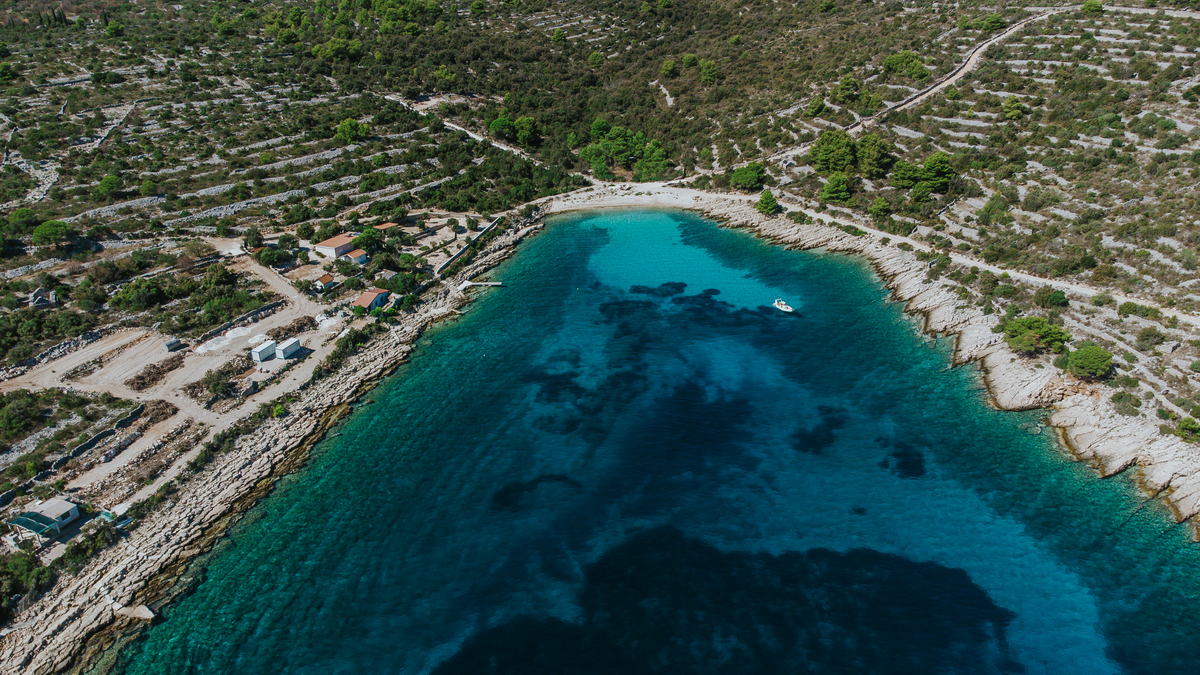
The Blue Lagoon here is Krknjaši, the shallow bay between the island of Drvenik Veli and the two Krknjaš islets, west of Trogir. It is the one people in Split mean by the name. The other lagoon of the same name is at Budikovac, off the south-eastern side of Vis and a good deal further out to sea; it appears on our 5 islands tour.
Rogač and Nečujam are both on Šolta, the island directly across the channel from Split. Rogač is its main port on the north coast — the ferry from Split docks there. Nečujam is the largest bay on the island, about twenty minutes east of Rogač by boat.
The shape of the day follows from that: west to Trogir, out to the lagoon, then south across the channel to Šolta and home from there.
The route
The tour lasts about 10 hours in total, normally 08:00 to 18:00. We do not publish a minute-by-minute schedule — on a private boat the time at each stop is yours to decide, and with only four stops there is real room to move it around.
Departure from Split
You meet your skipper at the agreed pick-up point, get a short safety briefing and head west along the Kaštela bay with the Kozjak ridge above the coast on your right. The run to Trogir stays in enclosed water the whole way. If it suits you better, this tour can also start from Kaštela or Trogir itself.
Trogir
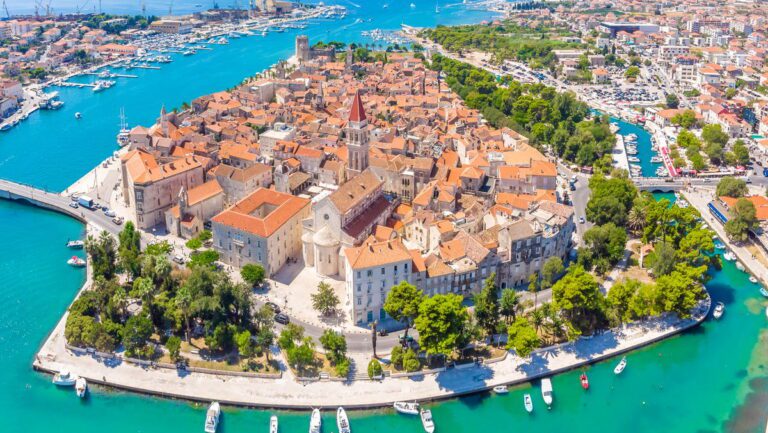
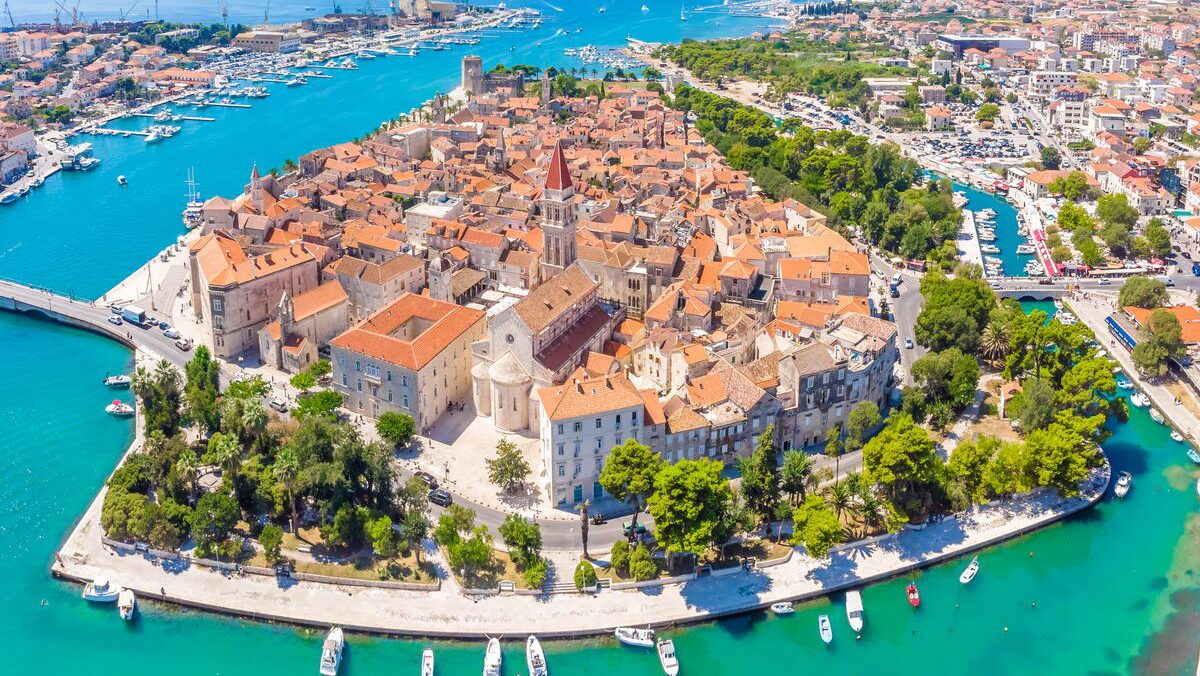
Trogir is the reason this tour starts early. The whole historic centre sits on its own small island between the mainland and Čiovo, and it has been on the UNESCO World Heritage list since 1997 — inscribed as a remarkable example of urban continuity, with a street plan conserved to an exceptional degree and almost no modern building inside the walls.
Greek settlers from Issa on Vis founded it as Tragurion in the 3rd century BC, and every layer since has been built on the same footprint rather than beside it.
Three things are worth your time if you have a morning:
- The Cathedral of St Lawrence. Construction began around 1200 and ran for four centuries, which is why Romanesque, Gothic and Renaissance are all legible in one building. The west portal, signed by Master Radovan and dated 1240, is the piece people come for; the bell tower above it was finished only in the late 16th century, and you can climb it.
- The Kamerlengo fortress on the south-western corner of the island, Venetian, with a rampart you can walk and a view back across the roofs to the channel.
- The streets between them. Trogir is small enough to cross on foot in fifteen minutes and dense enough that you will get lost anyway.
Lunch is easiest on the riva outside the walls, and this is where most groups take it. If you'd rather visit independently, see our guide on how to get to Trogir from Split.
Blue Lagoon, Krknjaši bay
From Trogir it is a short run west to the Blue Lagoon, the stretch of water between Drvenik Veli and the islets of Krknjaš Veli and Krknjaš Mali.
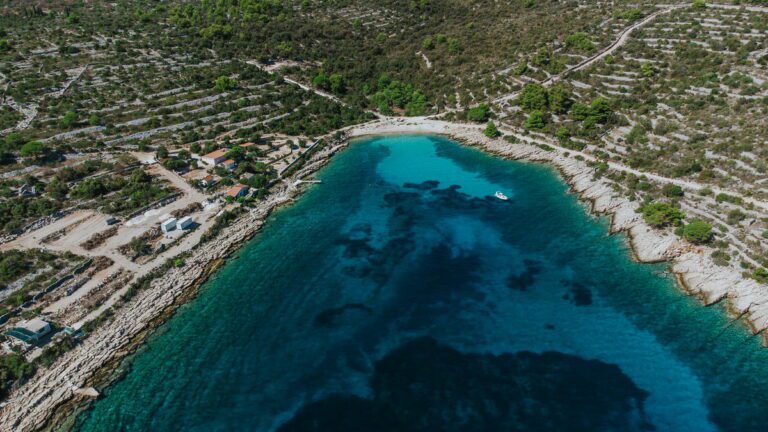
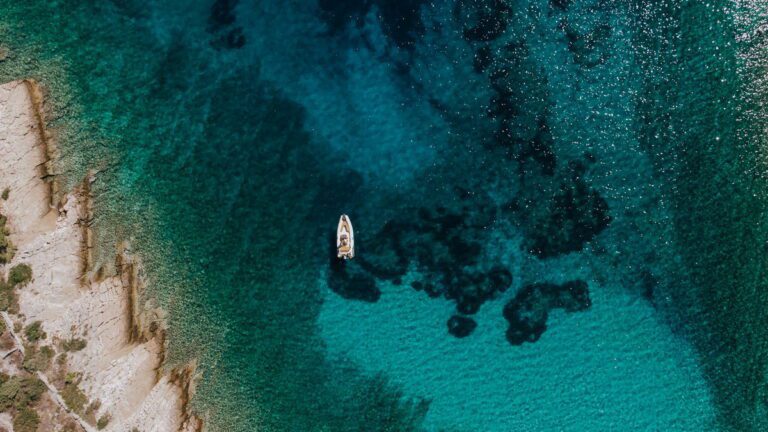
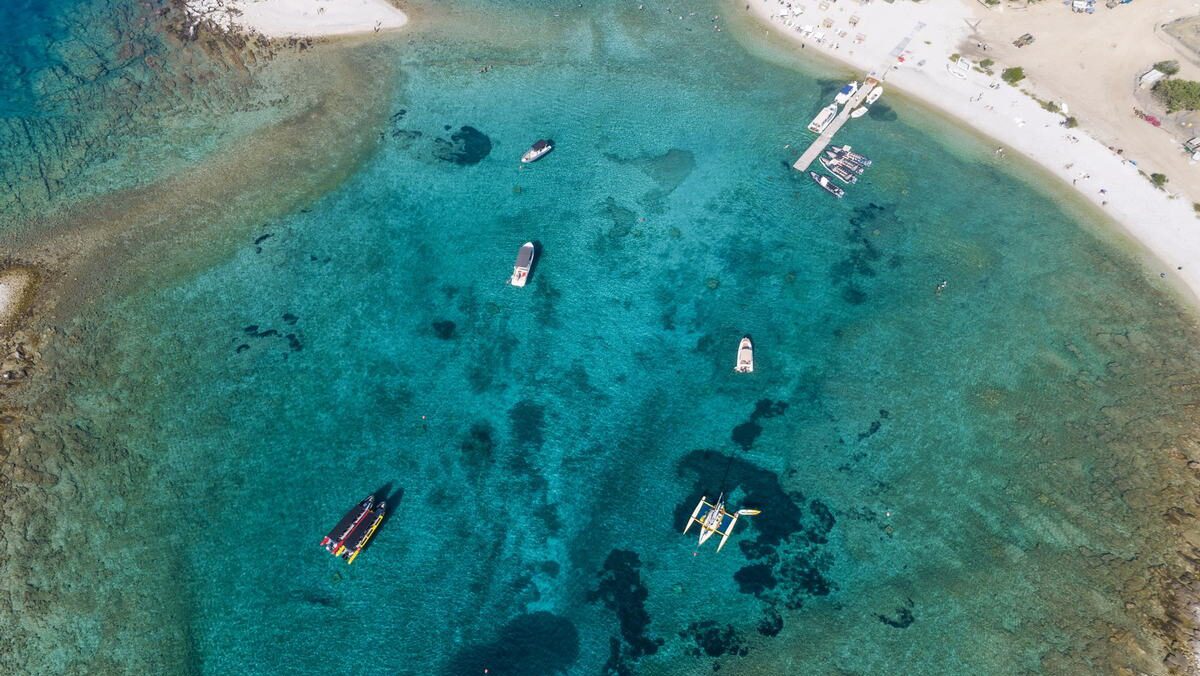
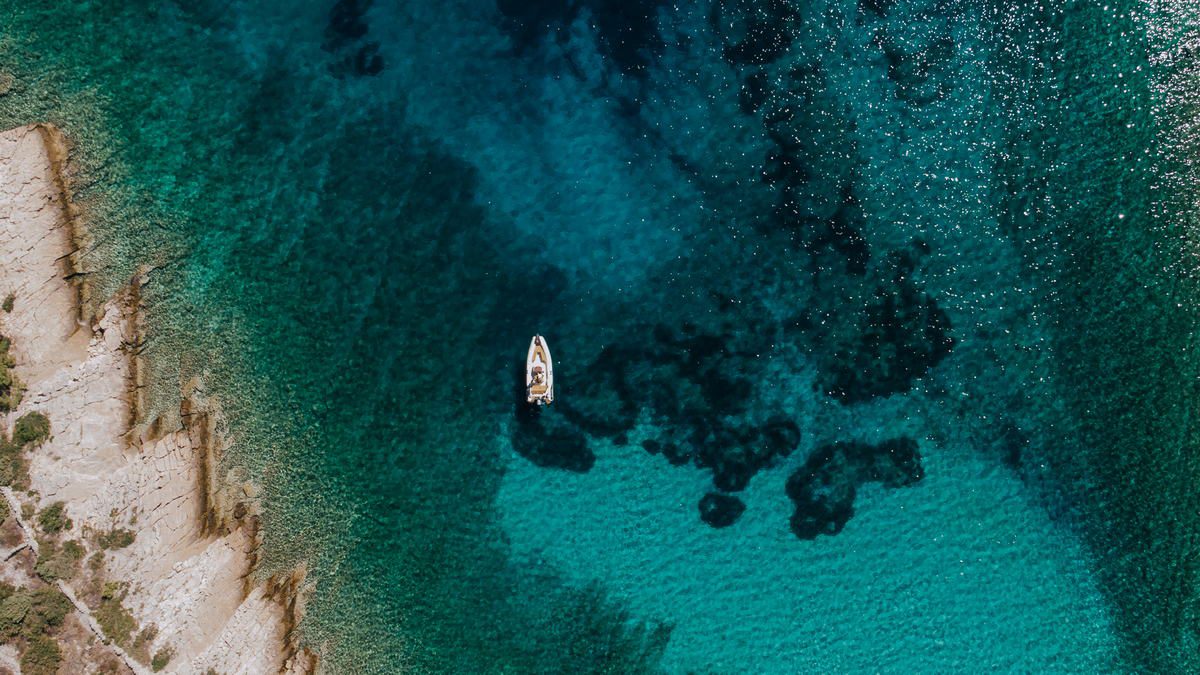
The colour comes from the bottom, not the water. It is pale sand and Posidonia seagrass at a depth that over much of the bay is only waist to chest deep, so the light goes down, bounces and comes back turquoise. The seagrass is protected, and skippers who know the bay drop anchor on the sand and stay off the meadows.
This is the main swimming stop of the day and the best snorkelling on the route — and the one place on our full-day schedule where guests who are not confident swimmers can get in without thinking about it. There is a konoba on the Drvenik Veli shore. Our guide to spending half of the day at Krknjaši lagoon goes into more detail if you want it.
Rogač, Šolta
Rogač is the front door of Šolta, and no other full-day tour we run calls there.
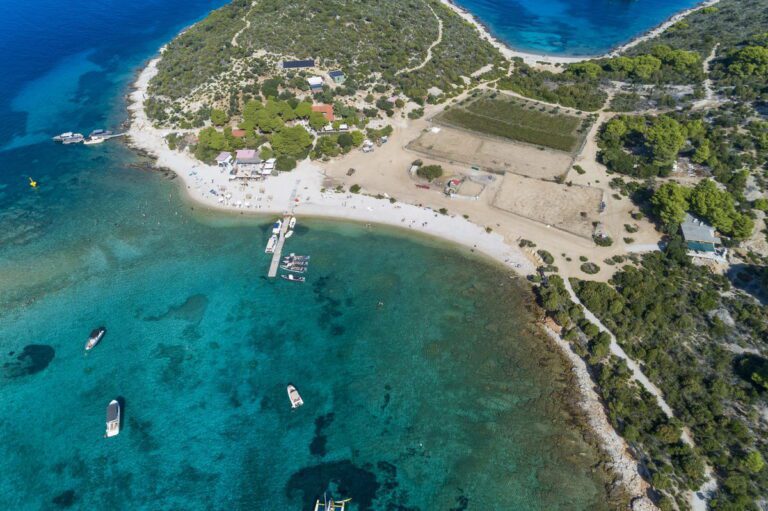
It grew up as the harbour for Grohote, the island's oldest and largest village, two kilometres inland and still its administrative centre — municipal offices, pharmacy, post office, police. Everything that reaches Šolta reaches it here first: the Jadrolinija car ferry from Split on line 636, an hour each way, and a catamaran that does it in half that. When the ferry lands, two buses are waiting on the quay, one heading east to Stomorska and one west to Maslinica.
That is what makes it worth a stop. Rogač is not a postcard harbour but a working one, and in July you can watch an island's whole logistics happen in the twenty minutes it takes to unload a ferry.
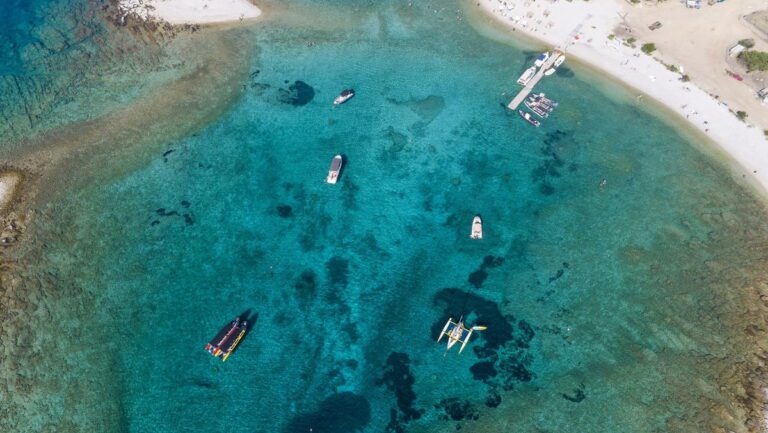
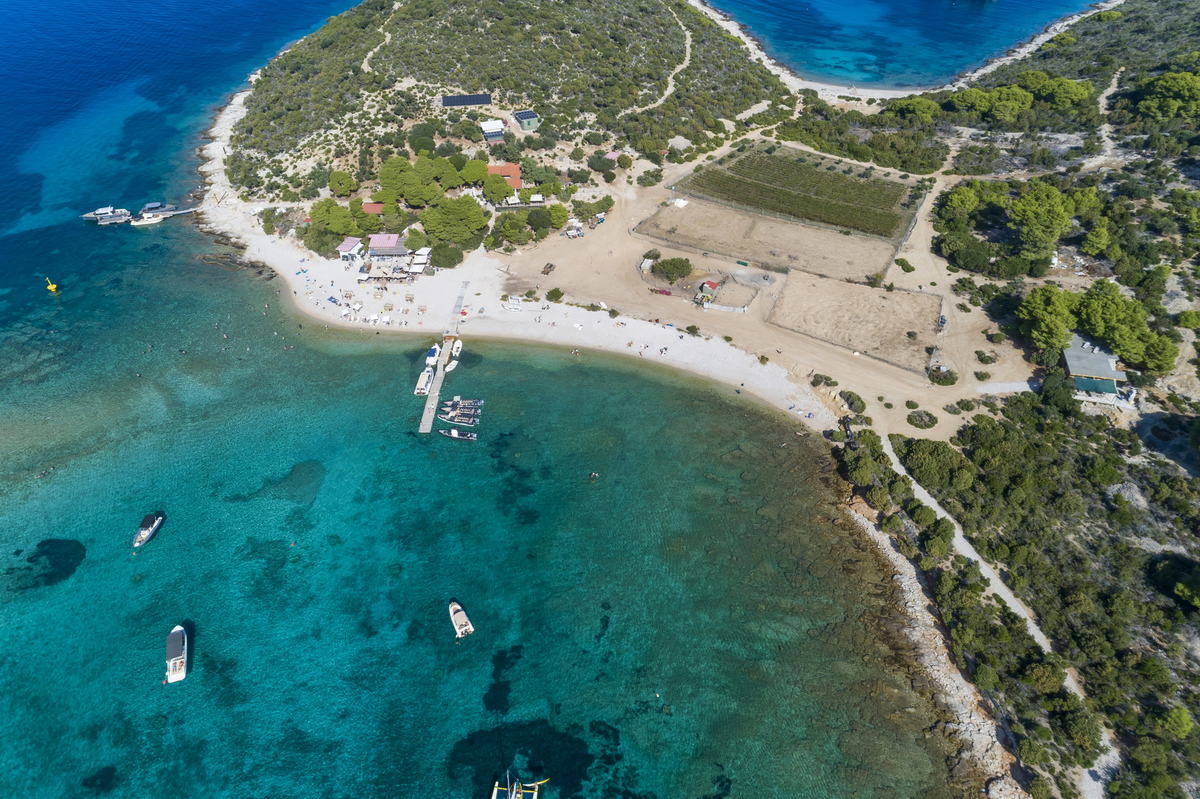
The bay is deep and well sheltered, with the beaches at Banje and Žustova a short walk from the pier. Most groups use the stop for a coffee and a swim.
Nečujam, Šolta
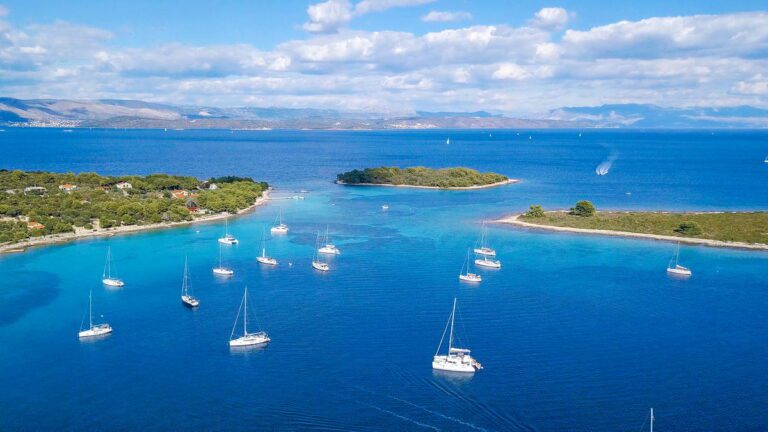
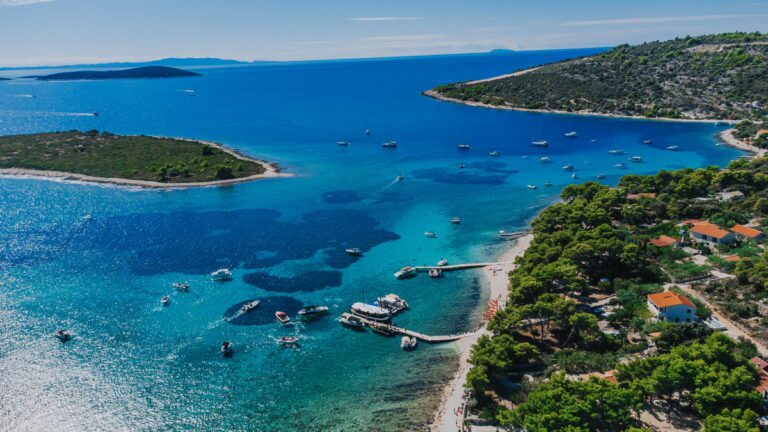
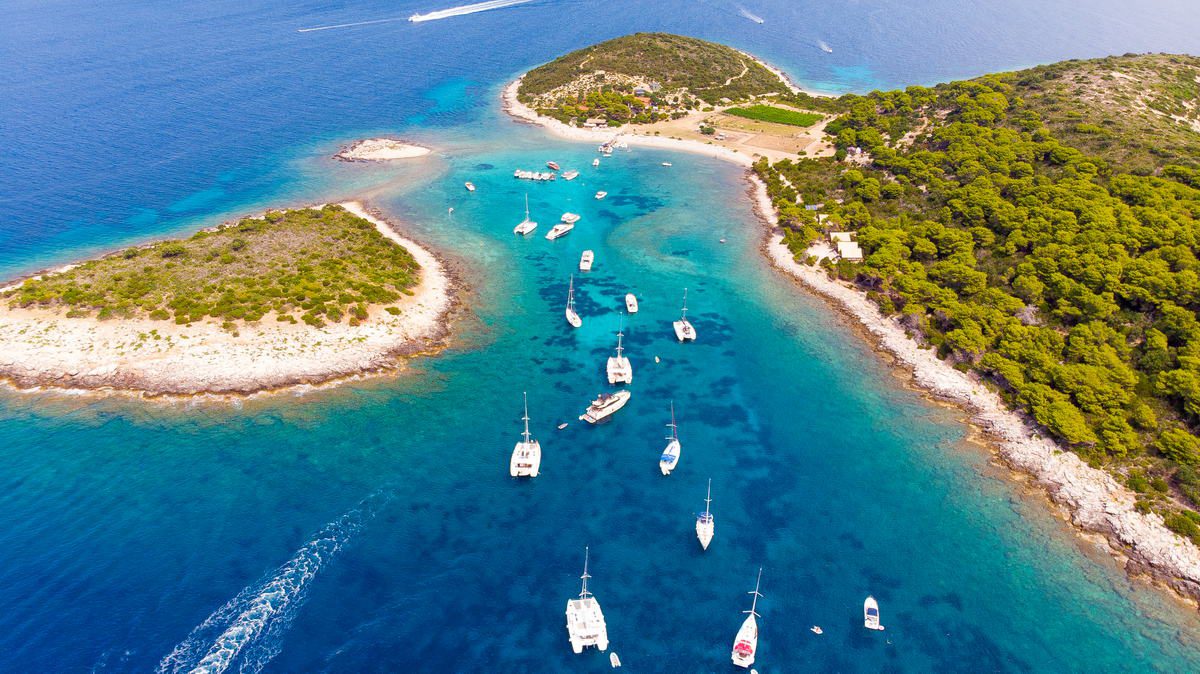
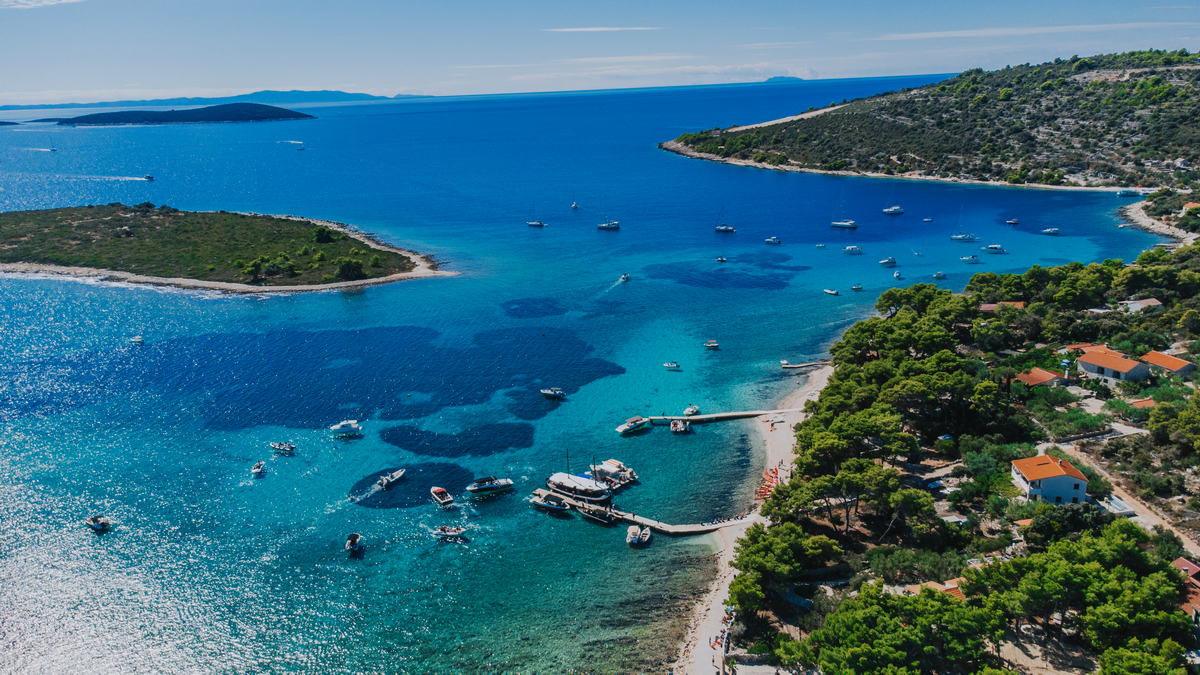
Nečujam is the largest bay on Šolta and, strictly speaking, eight small coves inside one big one: Supetar, Bok od Supetra, Šumpjivina, Podkamenica, Maslinica, Tiha, Bok od rata and Piškera.
Its Latin name was Vallis Surda, the deaf bay — it is so large and so enclosed that sound gets swallowed in it.
The cove to swim in is Piškera, and the name is the clue: it comes from piscina, a Roman fishpond. A stone barrier roughly 64 metres long still runs across part of the cove, built to close it off and keep live fish inside, with gaps left for the water to circulate. It is submerged, protected as cultural heritage, and visible from the surface on a calm day — you can snorkel straight over it with the mask that is already on the boat. Local tradition ties it to Diocletian's palace in Split, a short row across the channel; the archaeology confirms the fishpond, not the emperor.
The beaches on both sides of the bay are pebble and rock, not sand, with pine shade behind them. This is the last and quietest swim of the day.
Return to Split
Nečujam faces the city, so the run home is the shortest of any of our full-day tours — about half an hour across the Split channel, with Marjan and the mountains ahead of you.
What Šolta is known for
Three things the island produces are worth knowing about before you order lunch. Šoltansko maslinovo ulje, pressed from the island's own Levantinka olive, has held EU protected designation of origin status since 2016. Dobričić is an old Šolta red grape, nearly extinct fifty years ago, which DNA work identified as one of the two parents of Plavac Mali — the other being Crljenak kaštelanski, the grape the rest of the world calls Zinfandel. And the beekeepers around Grohote sell rosemary honey from the maquis that covers the interior.
Which of these five tours is yours?
Five of our tours, this one included, cover part of the same water. They overlap enough that the differences are worth spelling out.
This tour — Trogir, Blue Lagoon, Rogač and Nečujam
Full day, four stops, from 522 €. Longest time in Trogir, longest swim in the lagoon, and the only route that calls at Rogač. Take it if you want a full day without a full itinerary.
Kaštilac, Trogir, Blue Lagoon and Šolta
The same first half of the day, then a different Šolta: Maslinica on the western end instead of Rogač, plus Nečujam. It also adds Kaštilac at Kaštel Gomilica, the fortified islet HBO used as Braavos in Game of Thrones. Six stops instead of four, so less time in each.
Blue Lagoon, Hvar and Pakleni islands
Same lagoon, then the day turns south: Hvar Town and the Pakleni islands in the afternoon. Busier, more famous, more expensive, and with a real open-water leg in it. Take it if it is your first time in Dalmatia and you want to see Hvar.
Half-day Blue Lagoon and half-day Šolta
Five hours each, morning or afternoon. The first is Trogir and the lagoon — exactly the first half of this tour. The second is Nečujam and Stomorska.
One comparison is worth making explicitly: the half-day Blue Lagoon tour starts at 504 €, this one at 522 €. For eighteen euros more you get twice the day and two extra stops. If price is what points you at the half-day, look again; if five hours on a boat is simply enough for your group, the half-day is the right call.
Best time of year for this tour
- May and early June – comfortable air, sea around 20–22 °C, Trogir walkable at midday and the lagoon almost empty.
- July and August – warmest sea and longest days, but Krknjaši fills up from late morning and Trogir is crowded from ten onwards. An early start matters most now.
- September – the sea is at its warmest of the year and the day-trip crowds have gone. The best month for this route.
- October – still good on calm days, and Trogir is at its most pleasant once the coaches stop.
Because the route stays in the Trogir and Split channels, this is one of the two tours we can usually still run when wind cancels the outer-island trips.
Who is this tour for?
Families
No open-sea legs, short crossings, and the shallowest swimming stop of any full-day tour we run.
Anyone who wants a slow day
Four stops, no schedule, time to sit down in two of them.
Guests interested in history
A Greek foundation and a UNESCO cathedral in the morning, a Roman fishpond you can snorkel over in the afternoon.
Repeat visitors to Split
The stretch of coast most people sail past on the way to Hvar.
If you came to Croatia for the famous island scenery, this is not the tour — take the Blue Lagoon, Hvar and Pakleni islands route instead. And if ten hours is more than your group wants, the half-day tours cover the same water in five.
What to bring
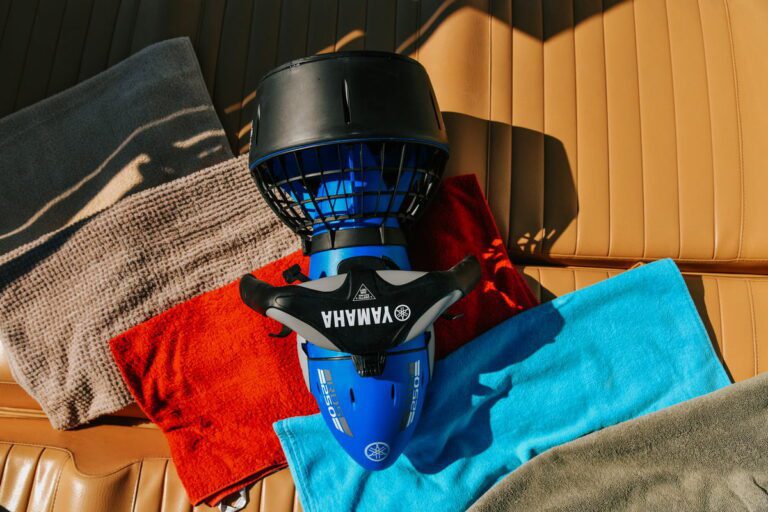
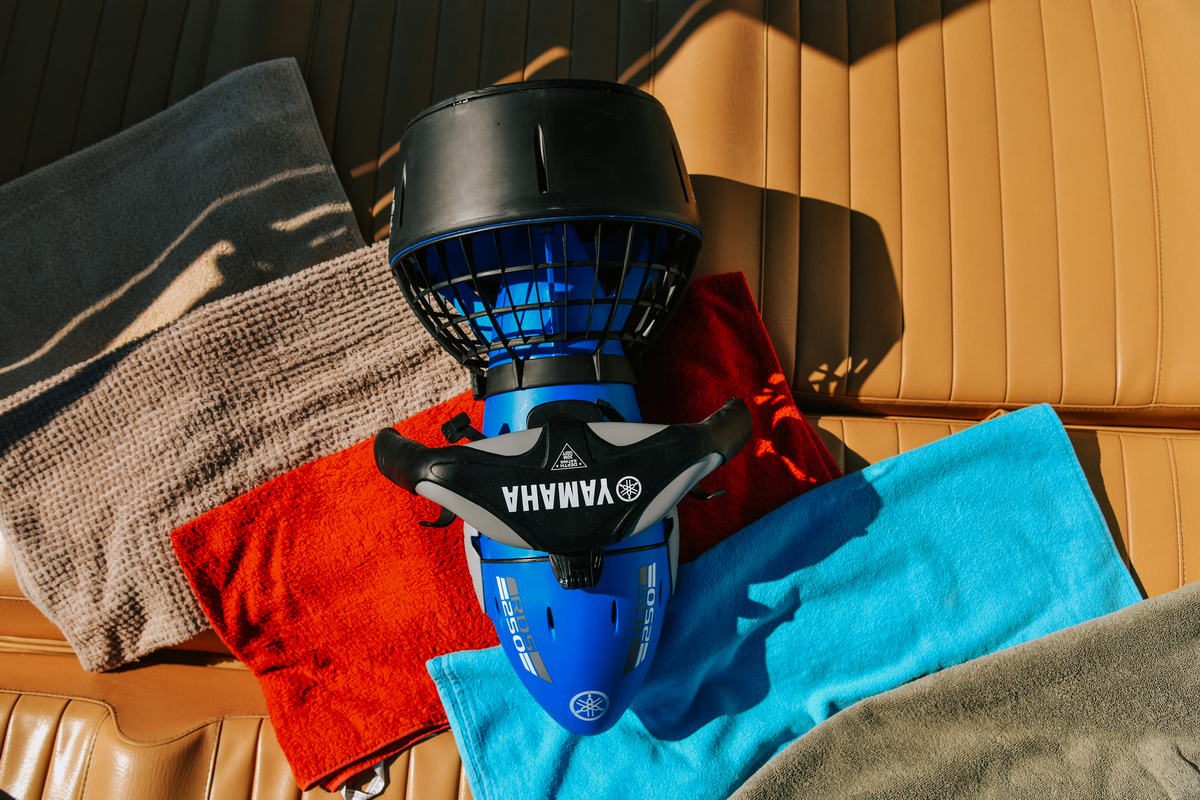
Swimwear, a towel, sunscreen, sunglasses, a hat, a light jacket for the crossings, comfortable shoes for the stone streets in Trogir, and cash or card for lunch and the bell tower. Water, snorkelling gear and safety equipment are already on board. Want to add a sea scooter and SUP to your day? These can be arranged as an extra.
No extra cost for pick-up at this location
Extras
Boat pickup 60€
Fun pack sea scooter and sup padlleboard 60€
Towels 10€ per group
Location
Gallery

Booking form
FAQ
How long is the Trogir, Blue Lagoon, Rogač and Nečujam tour?
A full day of about 10 hours, normally 08:00 to 18:00. The departure time can be moved for your group.
Which Blue Lagoon does this tour visit?
Krknjaši, between Drvenik Veli and the two Krknjaš islets, west of Trogir. Not Budikovac near Vis, the other Blue Lagoon on this coast, which is on our 5 islands tour.
Where are Rogač and Nečujam?
Both are on the north coast of Šolta, the island opposite Split. Rogač is the island's main port, where the ferry from Split docks; Nečujam is its largest bay, a short run east of it.
How much time do we get in Trogir?
Usually two hours or more — enough for the cathedral, the Kamerlengo fortress, a walk through the old town and lunch on the riva. This tour gives Trogir more time than any other route we run.
Should I take this tour or the half-day Blue Lagoon tour?
The half-day covers Trogir and the lagoon in five hours, from 504 €. This one adds Rogač and Nečujam and runs ten hours, from 522 €. Choose the half-day only if five hours on a boat is enough for your group — the price difference is eighteen euros.
Do we actually go ashore on Šolta?
Yes, at both stops. Rogač has a waterfront and beaches a short walk from the pier, and in Nečujam you can walk between the coves. Nothing on Šolta requires a hike.
Can we snorkel over the Roman fishpond in Nečujam?
Yes. It is a submerged stone barrier about 64 metres long in Piškera cove, visible from the surface in calm conditions. It is protected cultural heritage, so look but do not stand on or remove anything.
Are there sandy beaches on this tour?
No. The lagoon at Krknjaši has a sandy bottom in the water, which is what gives it the colour, but the beaches on Šolta are pebble and rock. The island's only sandy beach is Šipkova near Maslinica, which is not on this route.
Is this tour suitable for children?
It is one of the two we recommend first for families. There are no open-sea crossings, the swimming at Krknjaši is shallow and calm, and children's life jackets are on board.
Will I get seasick?
Unlikely. The route stays inside the Trogir and Split channels, sheltered on both sides. If swell is a problem for you, this is the full-day tour to choose.
Can we have lunch on the tour?
Yes. Trogir has by far the widest choice and most groups eat there; there is also a konoba at the lagoon and restaurants in Rogač and Nečujam. Lunch is not included.
Can we change the route?
Within reason. Stops can be shortened, reordered or swapped for a quieter bay, and extra swimming stops added if the sea allows. With four stops there is more room for this than on our longer routes.
What is a RIB and why do you use one?
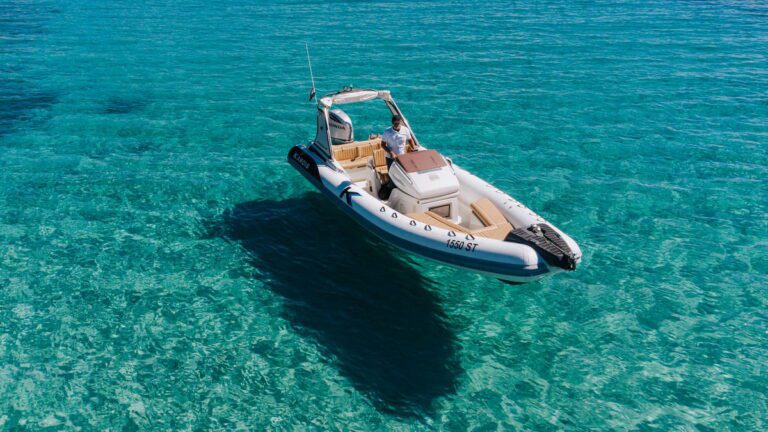
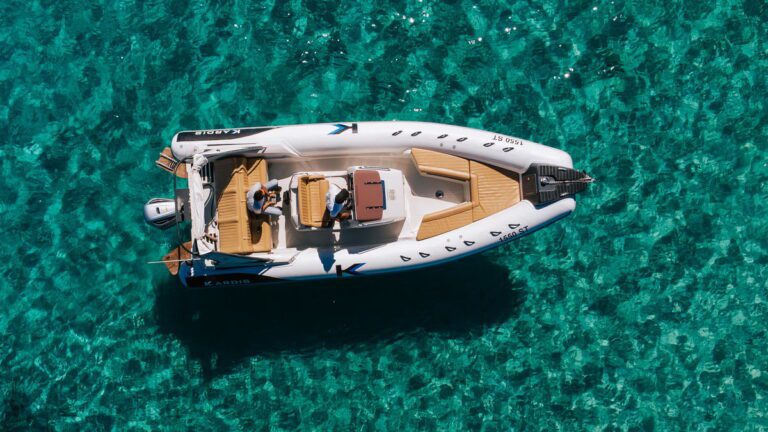
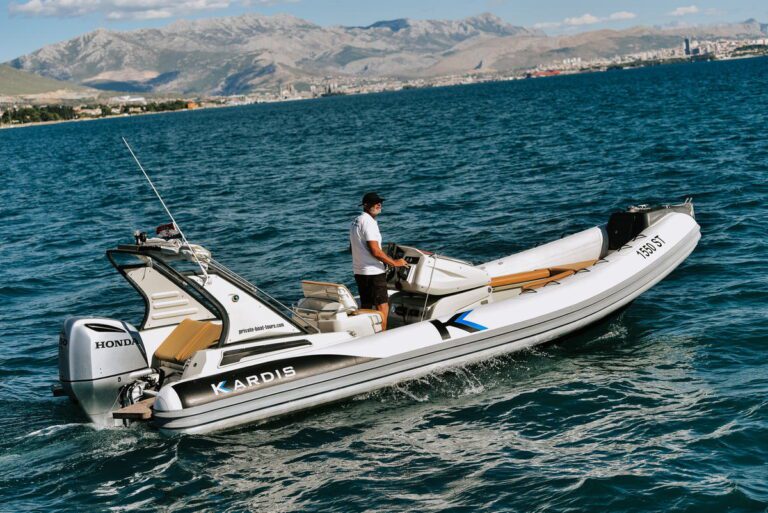
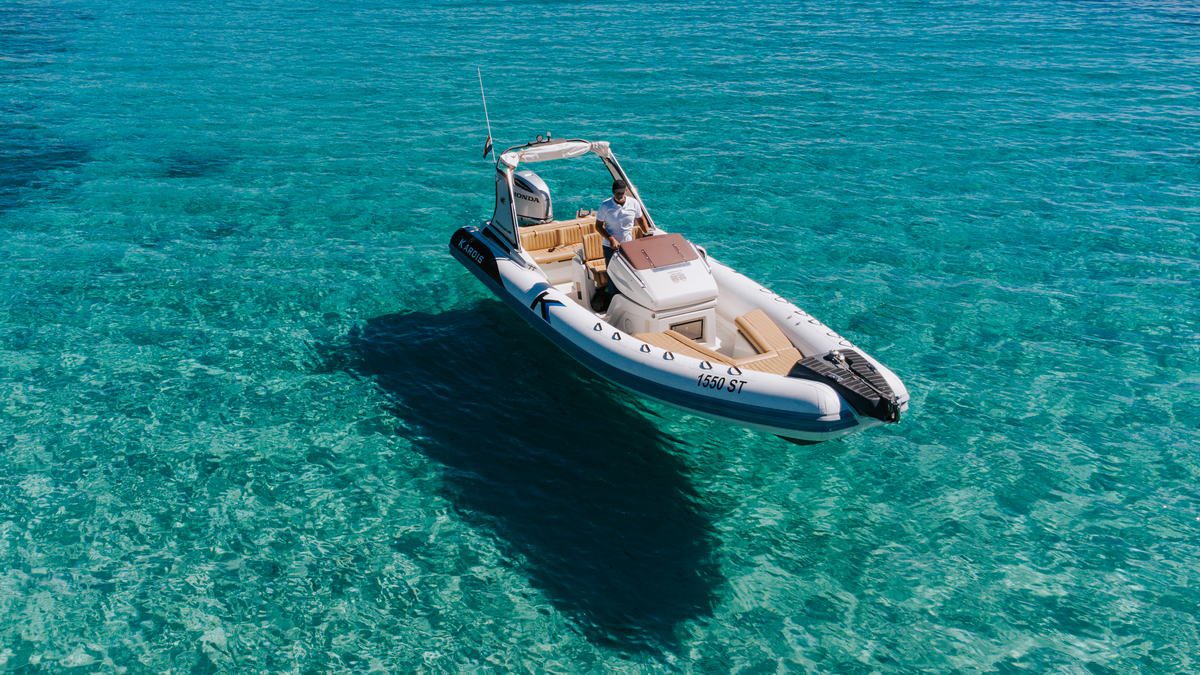
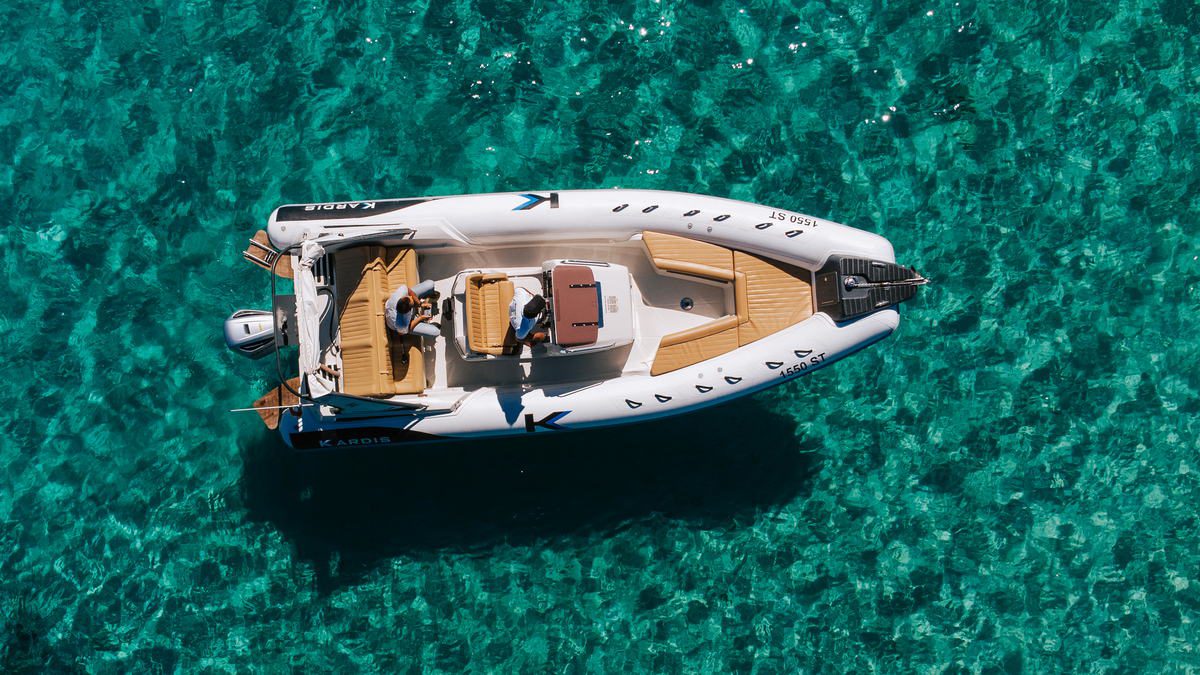
A RIB is a rigid inflatable boat — a solid hull with inflatable tubes along the sides. It is fast, stable and shallow enough to get in close at Krknjaši and inside the coves at Nečujam.
How much does the tour cost, and what is included?
The price is per boat, not per person, for up to 12 guests, so larger groups pay less per head. Current prices, including the online booking discount, are in the price table on this page. A licensed skipper, fuel, bottled water, snorkelling and safety equipment and boat insurance are included; lunch, drinks and extras are not.
Where does the tour start, and do I need to book in advance?
From the agreed pick-up point in Split, confirmed after booking; pick-up near your accommodation costs extra. Tours can also start from Kaštela, Trogir or Podstrana. Book ahead, especially from June to September — private boats are limited and the best dates go weeks in advance.