
Around Brač island private boat tour
Around Brač Island Private Boat Tour from Split
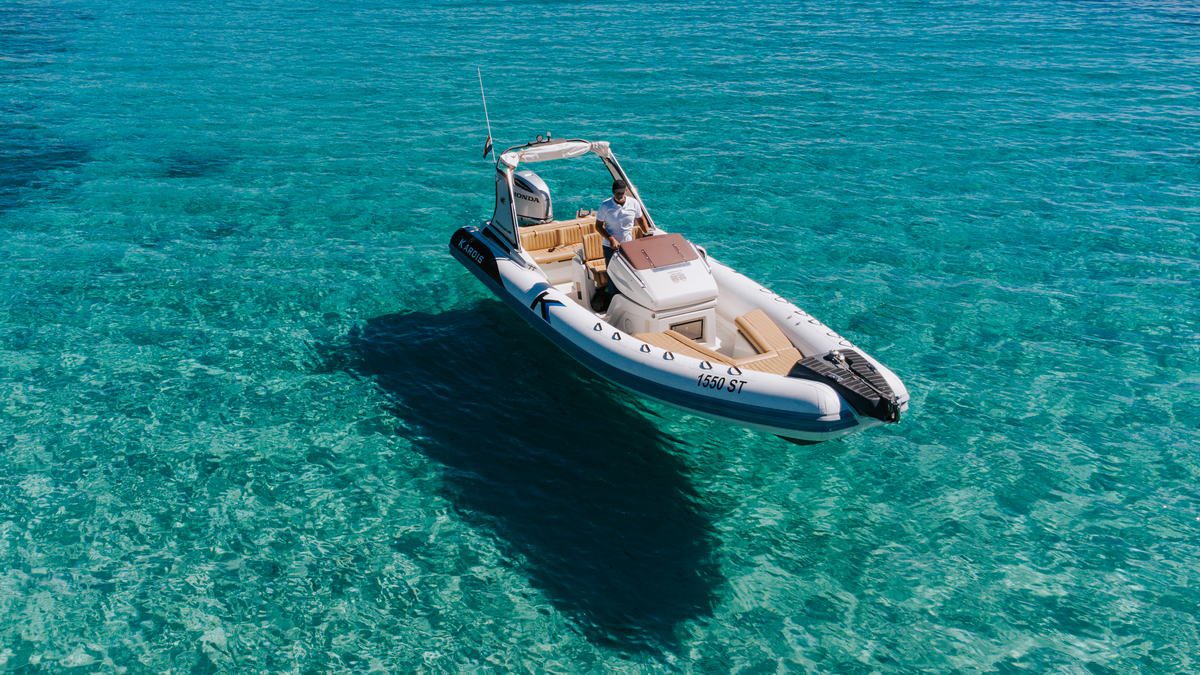
This is the only tour on our schedule that goes right around an island. Brač is the largest island in Dalmatia at 396 km², about 40 km from end to end, and in one day your boat closes the whole loop: the navy tunnel at Smrka, the Golden Horn at Bol, lunch in Sumartin, the stone town of Pučišća, the sand at Lovrečina and a last coffee in Supetar.
Six stops, four coasts, one boat that belongs only to your group, and no timetable — the direction of the loop and the time at each stop are settled with your skipper in the morning. Brač is the nearest of the big islands, the channel to the mainland 5 to 13 km wide, so the day is spent stopping rather than crossing.
What "around Brač" actually means
Most Brač day trips from Split are out-and-back: over to Bol, swim, come home. This one is a full circumnavigation, and each side of the island reads as a different place. The south-west coast below Nerežišća is uninhabited cliff and scrub, cut by the mouth of the Blaca canyon. The south coast holds Bol and the landform everybody recognises. The eastern tip is a working corner — a boatyard, a ferry to Makarska, no resort. The north coast is where the stone and the towns are.
The loop runs anticlockwise as standard: around the western tip past the Splitska vrata strait and Šolta, east along the south coast, around the eastern point, then west along the north shore. Your skipper reverses it when the wind sits in the wrong quarter.
The route
The tour lasts about 10 hours in total, normally 08:00 to 18:00. We do not publish a minute-by-minute schedule — on a private boat the time at each stop is yours to decide, and the sea decides the rest.
Departure from Split
You meet your skipper at the agreed pick-up point, get a short safety briefing and head out through the Split channel; pick-up from your accommodation costs extra. The crossing is short — the car ferry to Supetar takes 50 minutes, a fast boat a fraction of that.
Smrka bay and the navy tunnel
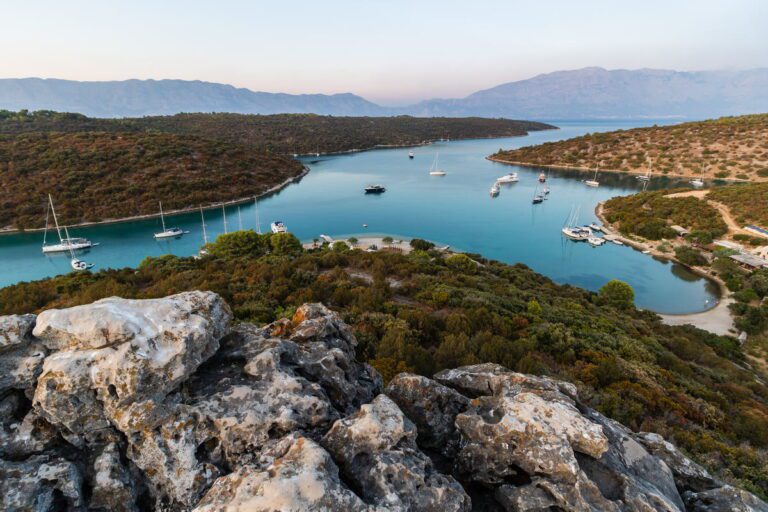
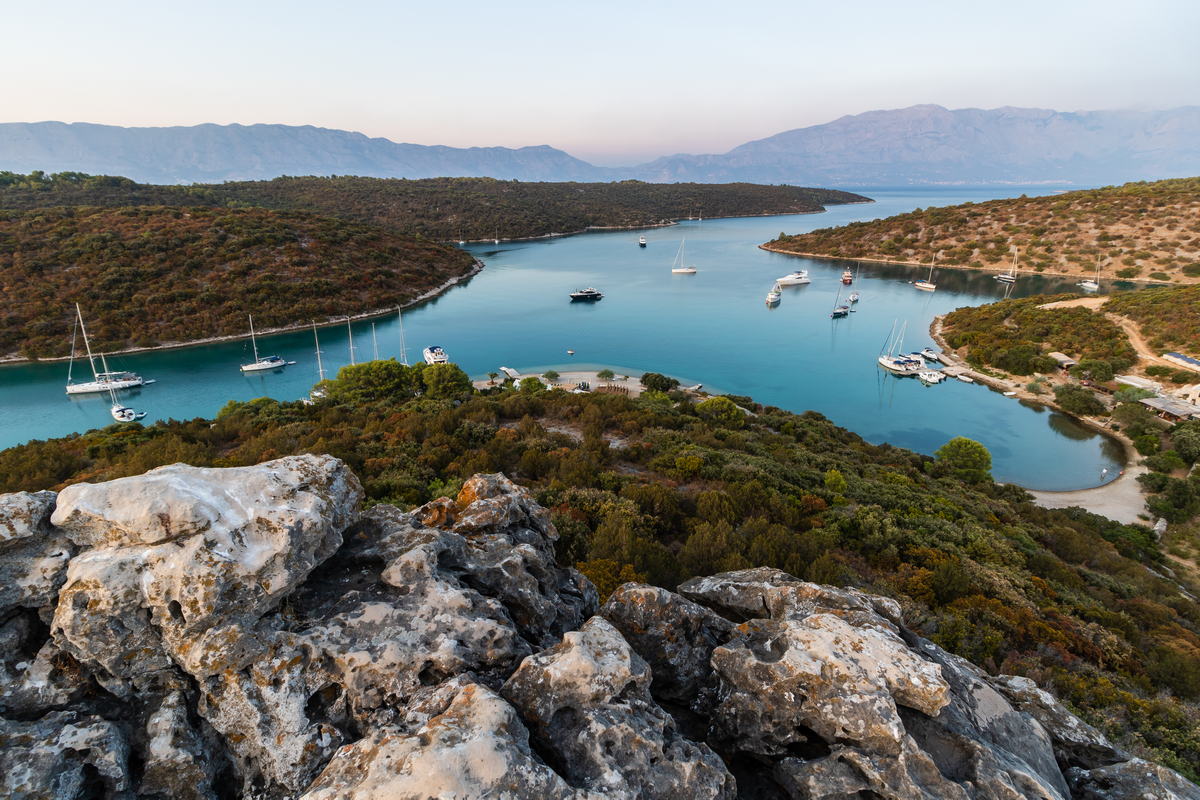
Smrka is a deep, steep-sided cove on the south-western coast, in the municipality of Nerežišća, with no road worth the name leading down to it.
Cut into the rock at the head of the bay is a tunnel built for the Yugoslav navy, a sheltered berth out of sight of the air and the horizon. Accounts of what was kept in it, and when, do not agree. The scale is not in dispute: the opening swallows a boat whole, the air inside drops several degrees, and the note of the engine changes. Your skipper takes you in if the swell allows — there is no lighting and nothing has been turned into a museum. Outside, the cove makes a good first swim: deep, shaded in the morning, usually empty.
Running east you pass the mouth of the Blaca canyon, cliffs up to 200 m high, with a hermitage founded by Glagolitic priests from Poljica hidden a long way up it. Its last occupant died in 1963. Reaching it means landing and a steep walk, so it is a swap for another stop, not an addition.
Zlatni rat, the Golden Horn
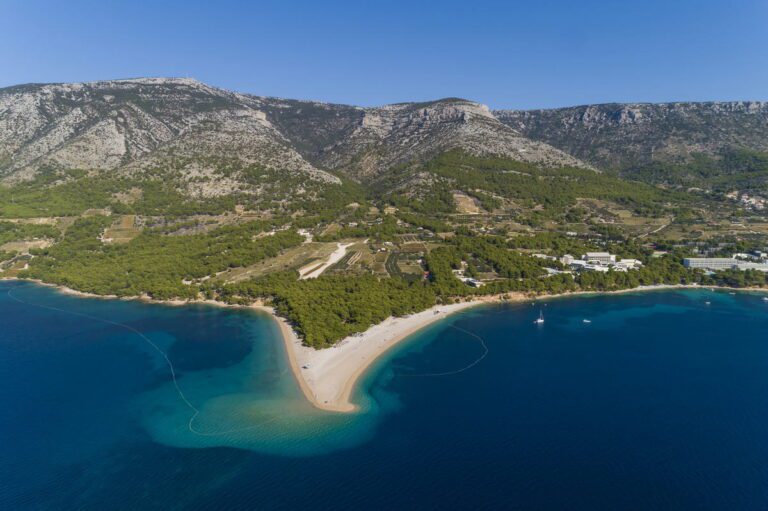
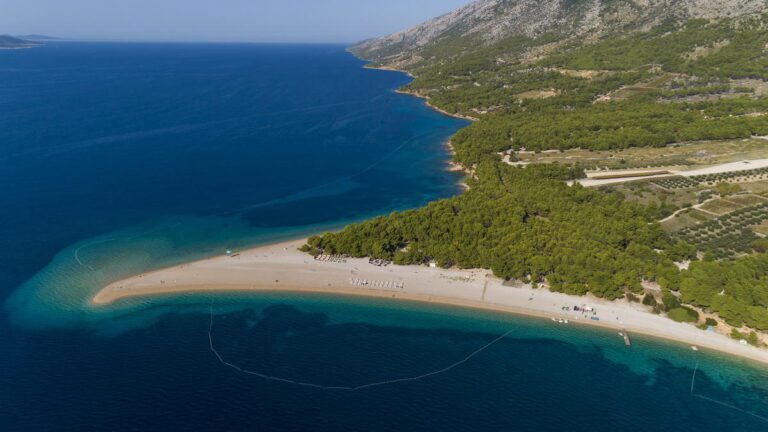
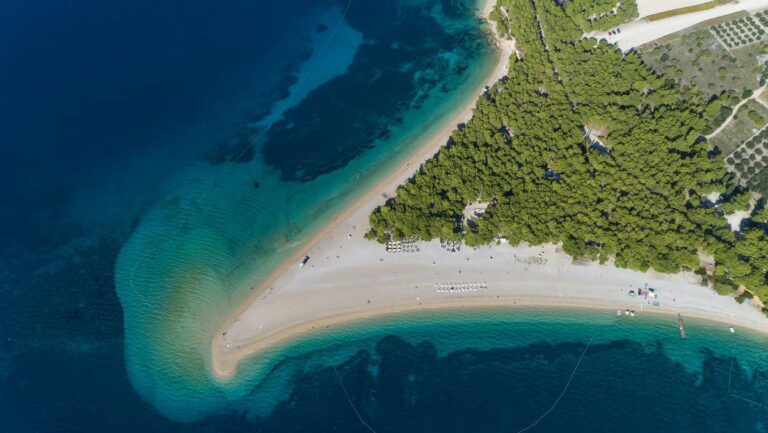
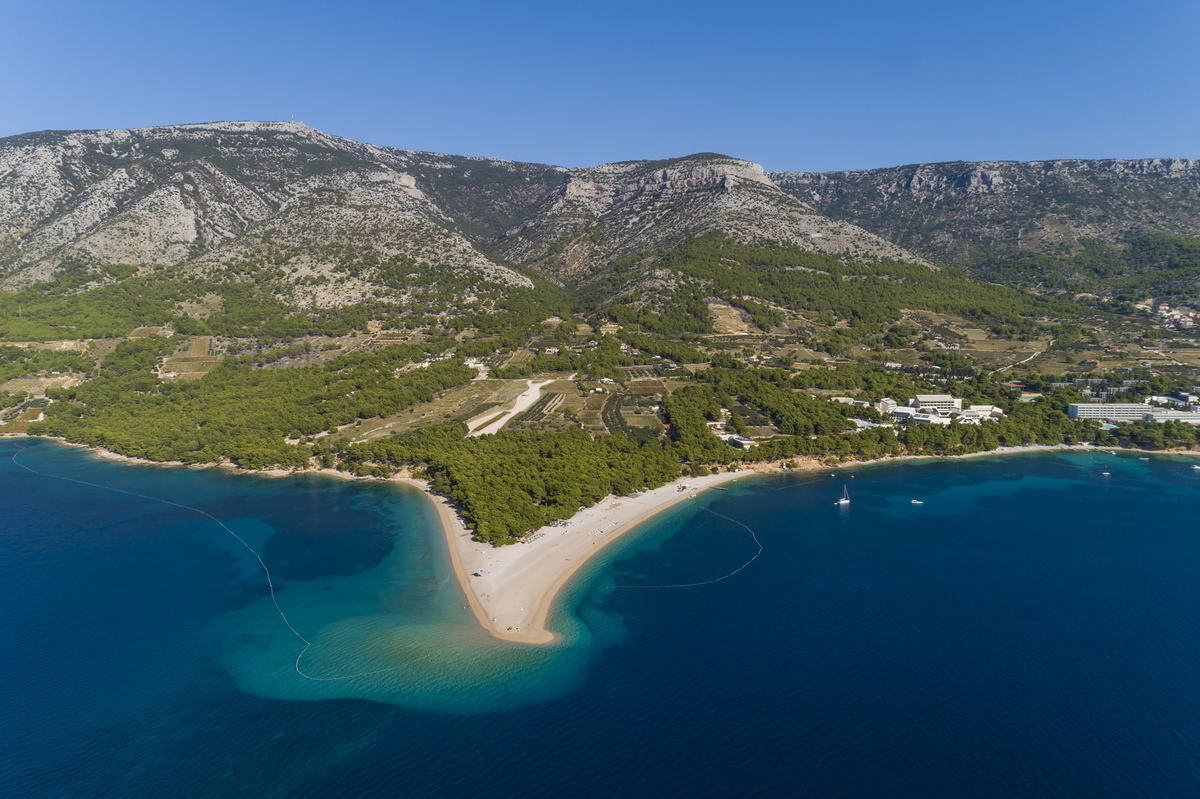
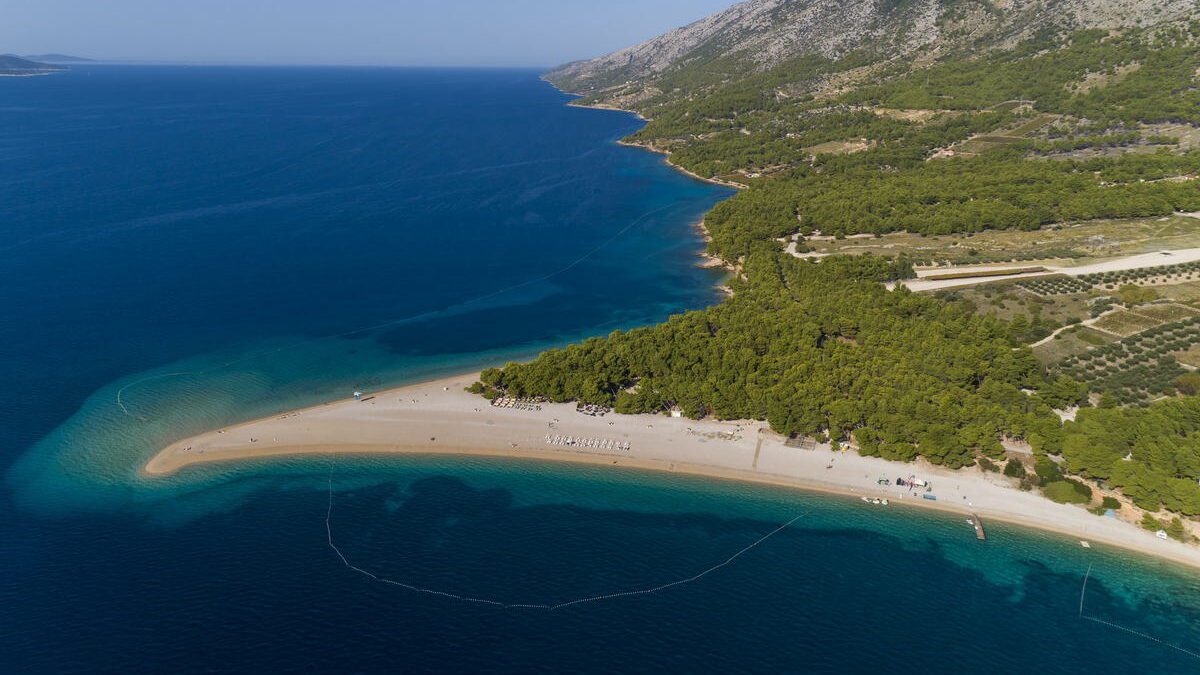
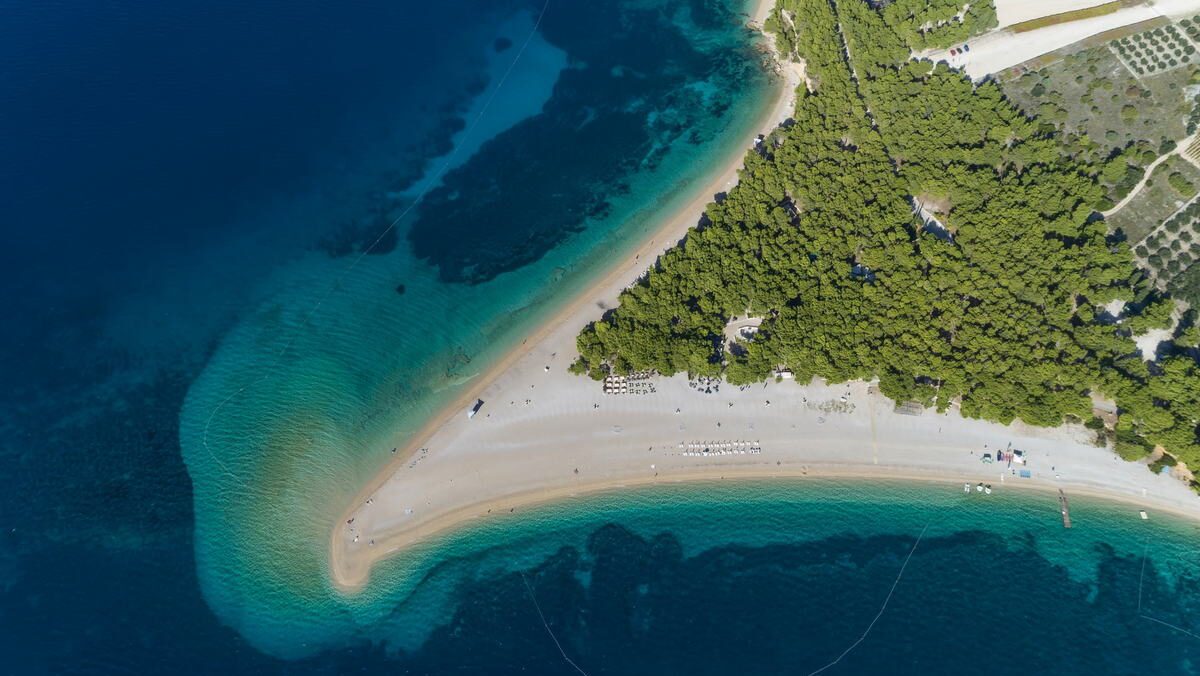
The spit at Bol is the one image of Croatia everybody has already seen, and from the water you understand its shape. It is neither sand nor permanent: golden pebbles carried along the coast pile up around a submerged reef, and every serious blow rebuilds the tip. The two sides are not even the same length — a 2015 survey measured 377 m on the east and 479 m on the west.
In summer the reliable afternoon westerly, the maestral, holds the point straight or bends it east, which is why the far end fills with windsurfers by mid-afternoon; a strong jugo flips the tip across within hours. Zlatni rat has been a protected significant landscape since 1965, so nothing has ever been built out on it.
We anchor off the point and you swim in, skipping the walk from Bol, the beach-bar strip and the parking.
Sumartin
Sumartin sits on the easternmost tip of Brač and is the youngest village on the island: founded on 11 November 1646, St Martin's day, by Franciscan friars and refugees who crossed from the Makarska coast to escape Ottoman raids. The friary above the harbour followed in 1747.
It has stayed a working place — a boatyard on the waterfront, a Jadrolinija ferry to Makarska, restaurants that cook for crews and the ferry queue as much as for visitors. That is why lunch is here rather than somewhere with a wine list: fish, lamb, island olive oil, at prices not set by a cruise schedule. Lunch is not included.
Pučišća
Rounding the eastern point onto the north coast brings you to the town the island's reputation is built on. Pučišća lies at the end of a long inlet, its houses faced in the white limestone quarried in the hills directly behind them — the same stone Diocletian's Palace in Split was largely built from between 295 and 305 AD.
Two things are worth going ashore for. Thirteen fortified tower houses were raised around this harbour from 1467 onward, when the Ottoman threat reached the coast; the place is still sometimes called the harbour of towers. And the stonemasonry school, founded in 1909 out of a masons' cooperative set up in 1902, still teaches carving by hand with the classical tools of the old Roman school — in season its workshop opens to visitors, on hours the school sets itself.
With 1,706 residents Pučišća is the second largest settlement on Brač, and it behaves like a working town rather than a viewpoint.
Lovrečina
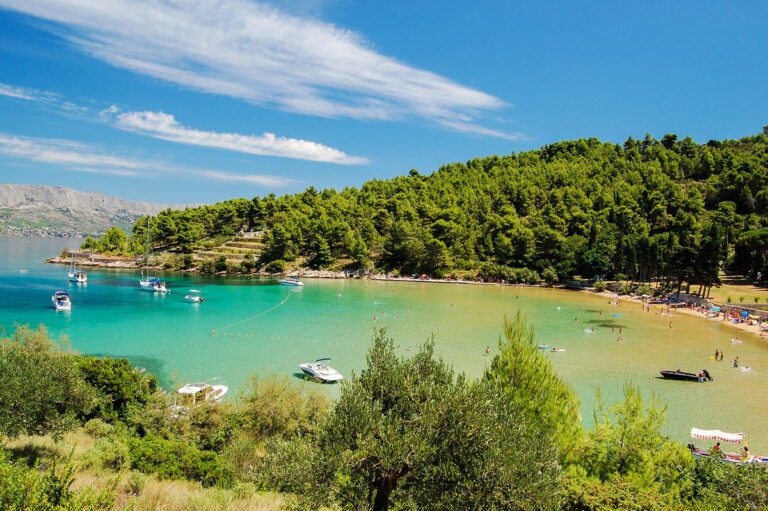
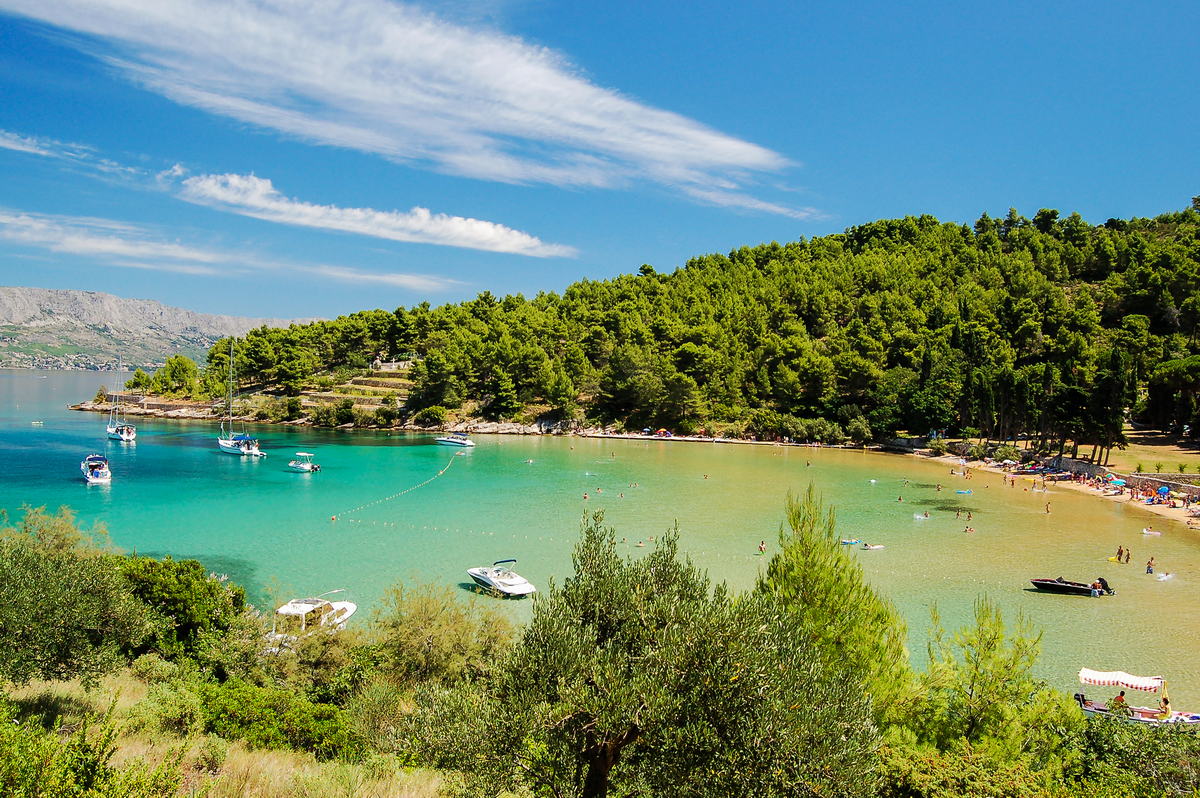
Brač is a pebble island. Lovrečina, a shallow bay on the north coast between Postira and Pučišća, is one of the very few places on it with real sand.
That is the practical reason it is on the itinerary: the water shelves gently, and it is the easiest swim of the day for small children and anyone unsure in deep water. Pines and poplars come down to the back of the beach, so there is shade without a parasol.
The bay was inhabited long before it was a beach. The remains of the early Christian Basilica of St Lawrence, dated to the 5th and 6th centuries, sit at the edge of the sand; mass is still held here on 10 August.
Supetar
The last stop is the island's largest town and administrative centre, more than 4,000 residents. The name comes from Sveti Petar, St Peter, and is first recorded in 1423.
Two short detours repay the stop: a 6th-century early Christian mosaic beside the parish church, and, in the cemetery on the peninsula west of the harbour, the Petrinović mausoleum, built in white Brač stone in 1927 by the sculptor Toma Rosandić. Many of the gravestones around it are by Ivan Rendić, who is buried there himself.
If you would rather eat dinner here than lunch in Sumartin, say so in the morning.
Return to Split
The run back across the Brač Channel takes well under an hour, with Marjan and the Split waterfront filling the horizon ahead — the shortest homeward leg of any of our full-day tours.
This tour, the Bol tour or the half-day to the north coast?
Three of our tours go to Brač, and two share stops with this one.
This tour is for the whole island. Ten hours, six stops, all four coasts, and the two places the others never reach — the tunnel at Smrka and the working port of Sumartin. It is the only way to see Brač as a shape rather than a destination.
The Bol and Golden Horn tour is for the Golden Horn. Eight hours instead of ten, trading the circuit for time ashore in Bol: the Dominican monastery on the Glavica headland, the promenade, lunch in town. Our circuit anchors off Zlatni rat and swims; that one walks into the town behind it.
The Lovrečina and Supetar half-day tour is for half a day, small children or a tighter budget. Five hours on the north coast, morning or afternoon departure, the two gentlest stops of the six and no long legs.
The Golden Horn destination page covers Zlatni rat itself and lists every tour that reaches it.
Best time of year for the Brač circuit
- May and early June – comfortable on deck, sea around 20–22 °C, Zlatni rat almost to yourself and the stone towns going about their own business.
- July and August – warmest water and the longest daylight, which matters on a ten-hour loop. Zlatni rat is busy from mid-morning, but arriving by boat skips the queue.
- September – the sea is at its annual warmest and the beaches empty out. For most guests the best of the four.
- October – fine on settled days, with the best light of the year on the north coast, but harder to plan around.
Wind decides the direction of the loop more than the season does. The south coast between Smrka and Bol is exposed to the jugo while the north coast is sheltered from it, so on a southerly day the skipper runs the circuit the other way round. There is far more shelter on this route than on our Vis and Biševo tours.
Who is this tour for?
Guests who have already done Hvar
Brač is the obvious second island, and this is the version that repeats nothing.
Anyone who likes towns as much as beaches
Three settlements, two swims and an archaeological site in a day.
Photographers
Zlatni rat from the water, the tunnel mouth at Smrka and the white inlet at Pučišća in one day.
Groups of up to 12
The price is per boat, so the cost per head falls as the group grows.
It is a long day and a lot of coastline. If you are travelling with a toddler, if someone has back trouble, or if the group would rather spend five hours in one bay than ten seeing six, the half-day tours suit you better.
What to bring
Swimwear, a towel, sunscreen, sunglasses, a hat, a light windbreaker for the two open legs, a change of clothes, and cash or card for lunch and coffee ashore. Water, snorkelling equipment, safety equipment and insurance are already on board.
No extra cost for pick-up at this location
Extras
Boat pickup 60€
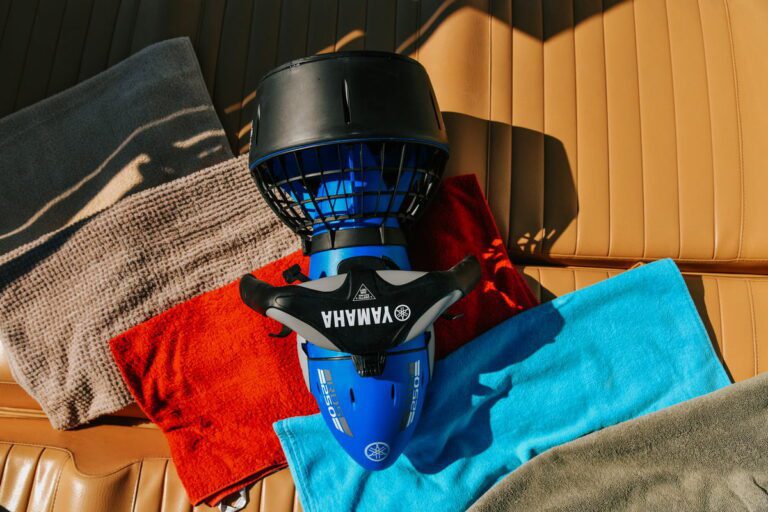
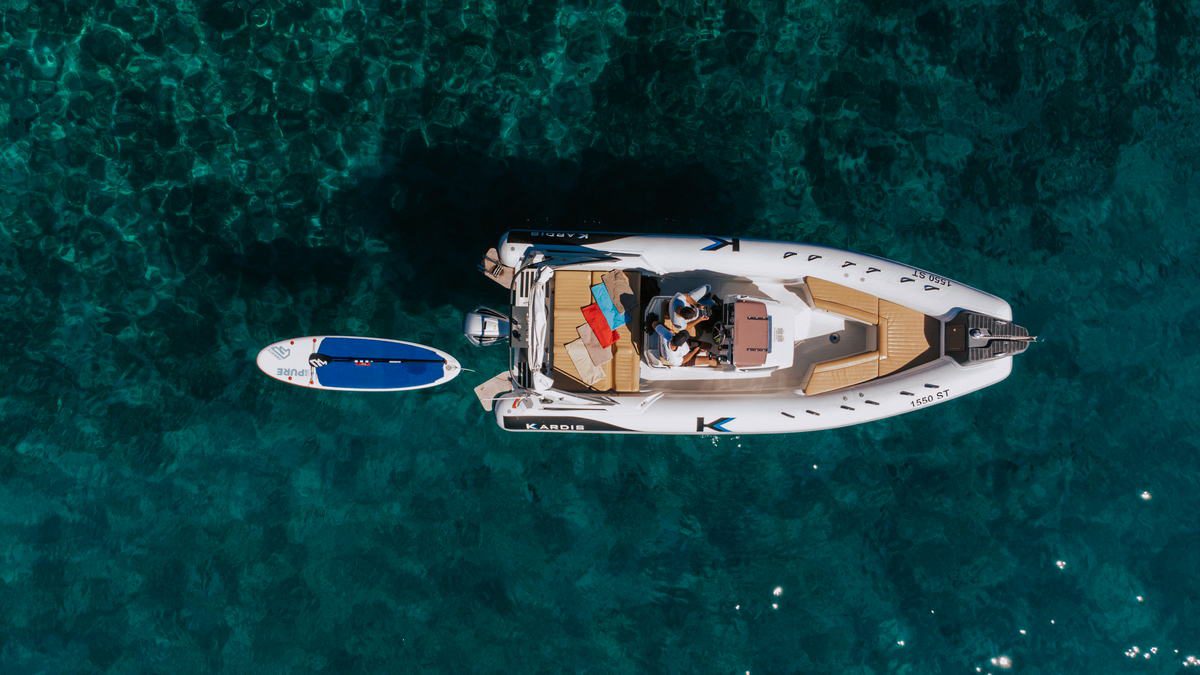
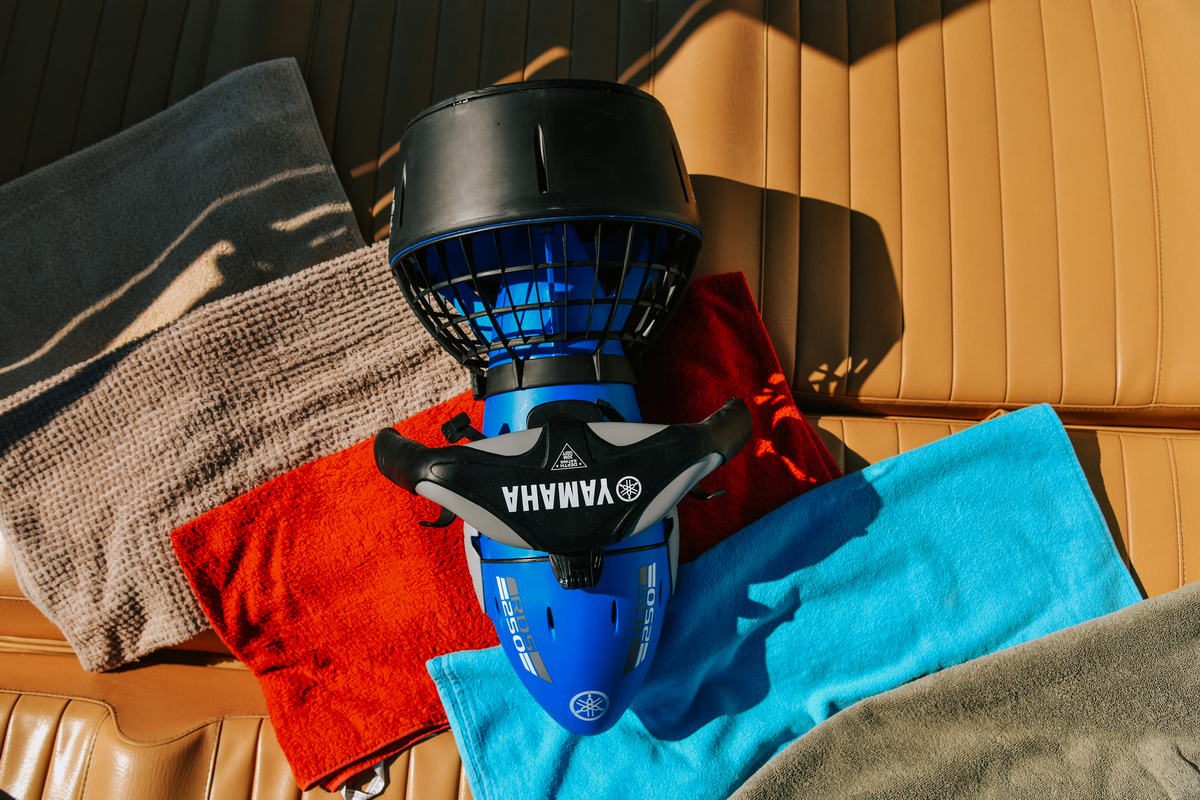
Fun pack sea scooter and sup padlleboard 60€
Towels 10€ per group
Location
Gallery
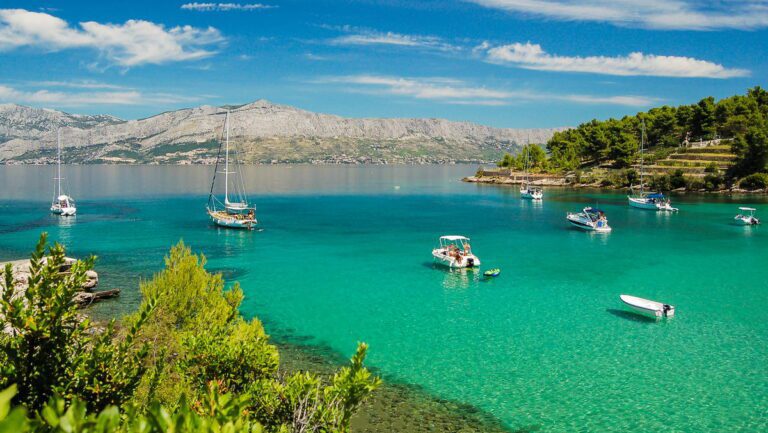
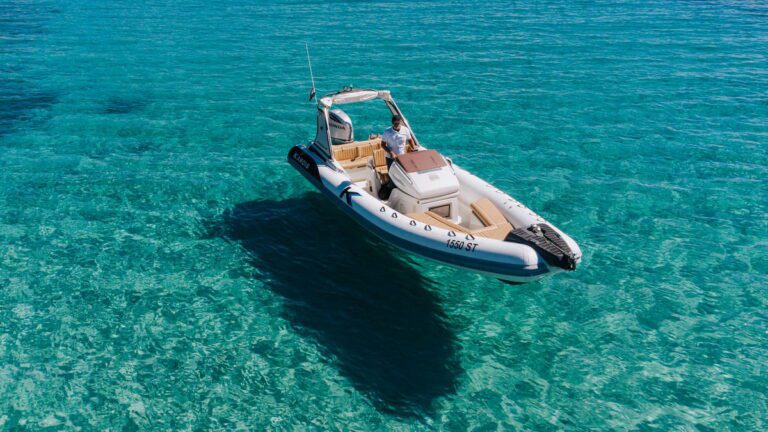
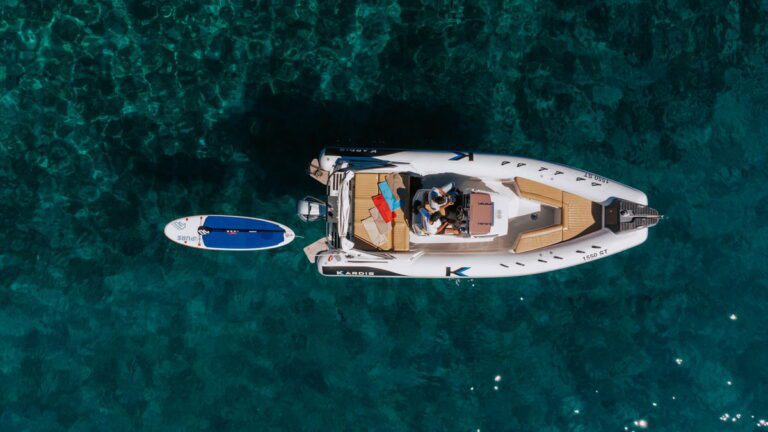




Booking form
FAQ
How long is the around Brač boat tour?
About 10 hours. The departure time is agreed with you when you book. The departure time can be moved to suit your group.
Do you really go all the way around the island?
Yes. Brač is roughly 40 km from end to end and the tour closes the full loop, normally anticlockwise: south-west coast, south coast, eastern tip, north coast. The direction can be reversed depending on wind.
Which beach is the Golden Horn?
Zlatni rat, the pebble spit at Bol on the south coast of Brač, protected as a significant landscape since 1965. We anchor off it and you swim in from the boat. More on our Golden Horn page.
Do we get time in Bol town?
Not on this tour — we swim at Zlatni rat and keep moving, because the loop has five more stops. For the town, the monastery and lunch ashore, book the Bol and Golden Horn tour instead.
Does this tour visit the Blue Cave?
No. The Blue Cave is on Biševo, near Vis, in the opposite direction from Brač. It is on our 5 islands tour and our Vis and Blue Cave tour.
Can we go inside the tunnel at Smrka?
Usually yes, if the swell at the entrance is safe; that call belongs to the skipper on the day. It is an unlit rock tunnel built for navy vessels, not a museum: no guide, no ticket.
Can we visit the stonemasonry school in Pučišća?
The workshop opens to visitors during the season, but the hours are set by the school and change from year to year, so treat it as a bonus rather than a booking.
Is Lovrečina really a sandy beach?
Yes, which on a pebble island is unusual. The bay shelves gently and the bottom is soft, so it is the easiest swim of the day for children. The remains of the 5th–6th century Basilica of St Lawrence are at the back of the beach.
Where do we stop for lunch?
Sumartin, on the eastern tip, where the restaurants cook for the ferry and the boatyard rather than for coaches. Lunch is not included. Pučišća and Supetar work as later alternatives.
Is there a toilet on board?
No, so we plan the stops around it. Sumartin, Pučišća and Supetar all have facilities in cafés and restaurants, and no leg of the route is long.
Is the tour suitable for children?
The swimming suits them well, particularly the shallow sand at Lovrečina. But it is a long day on the water, so for toddlers we suggest the Lovrečina and Supetar half-day tour instead.
Will I get seasick on this route?
Less likely than on our Vis routes. The Brač Channel is narrow and the north coast sheltered; only the south side is open water, and the skipper takes it when conditions are calmer.
What happens if the weather is bad?
The skipper watches the forecast and will normally reverse or shorten the loop rather than cancel. If the day is ruled out entirely, we offer another date, a different tour or a refund.
How much does the around Brač tour cost?
The price is per boat, not per person, for up to 12 guests. With the online booking discount it starts at €621 for up to five people; the full table is on this page.
Do I need to book in advance, and what is included?
Book ahead, especially from June to September — private boats are limited. Every tour includes a licensed skipper, fuel, bottled water, snorkelling equipment, safety equipment and boat insurance.